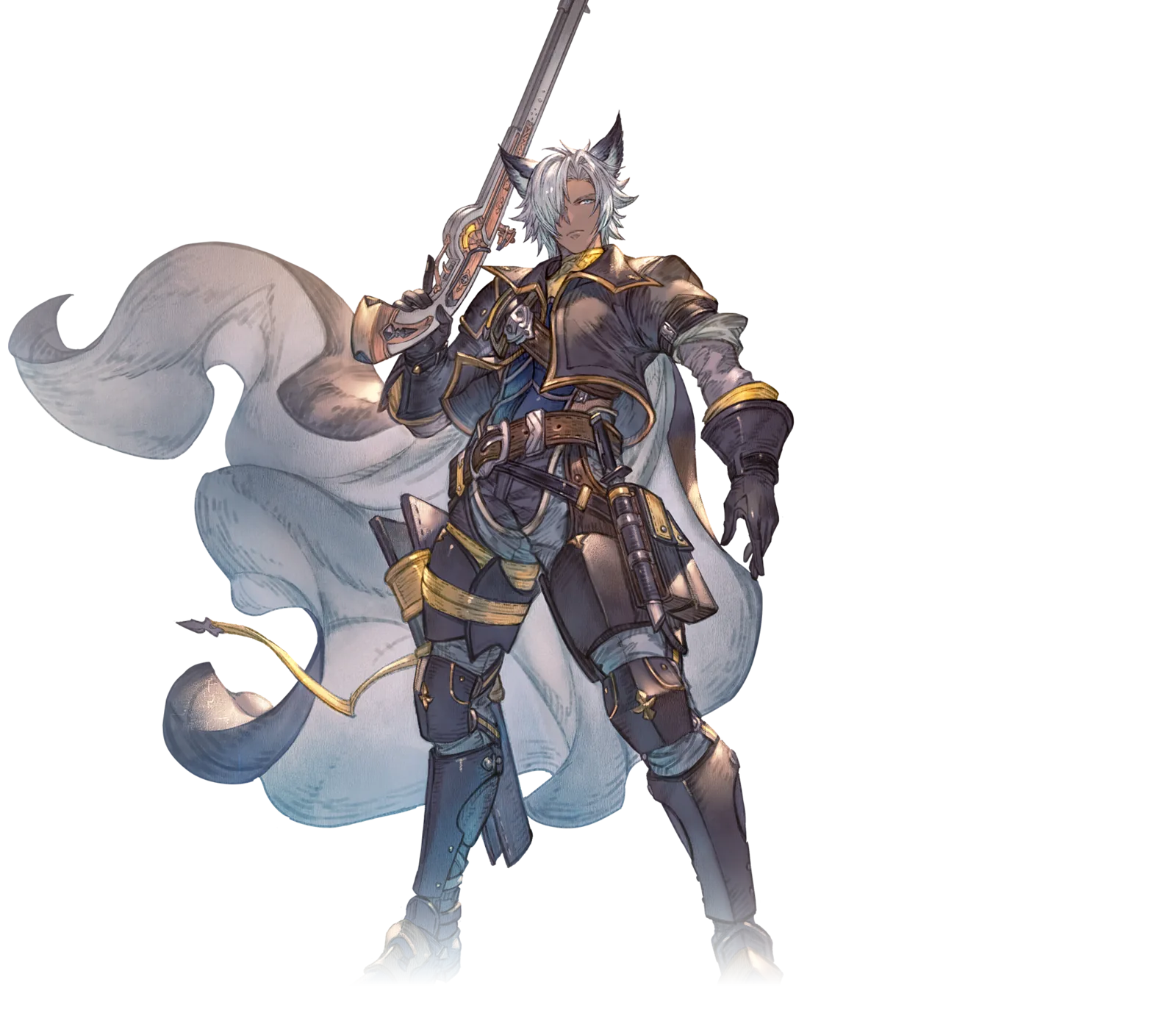
Siegfried remains a strong choice for players who like deliberate melee timing, heavy punish windows, and defensive party value. Endless Ragnarok does not require you to abandon an established Siegfried just because six new characters were added. What does need updating is the way you evaluate his current kit: Ver. 2.0.2 changed several of his status effects, fixed two Draconic Release problems, increased his Skybound Art's opening hit, and changed Mirage from a DEF increase to DMG Cut.
Cygames still presents Siegfried as the Dragonslayer, the loyal knight who saved his kingdom despite once being branded a traitor. That identity fits the playstyle surprisingly well: he rewards commitment, but the good version of commitment is measured. The core skill is not pressing through every greatsword string; it is recognizing exactly which boss recovery is long enough for the next correctly timed input.
Current Siegfried patch state
Ver. 2.0.2 is the important modern baseline for Siegfried. Cygames made several direct character changes:
- fixed a bug where following Uwe with Verdrängen could end Draconic Release prematurely;
- fixed an intermittent issue where a perfect execution could also end Draconic Release too early;
- increased the power of his Skybound Art's initial attack;
- changed Mirage so it grants DMG Cut instead of DEF↑;
- changed Draconic Release to grant Stackable ATK↑ as part of the broader status-effect calculation and stacking update.
The same global status-effect rework also adjusted the strength of Manigance and Verdrängen. Cygames specifically lists their ATK↑ and DEF↓ effects among the skills whose values were reduced to preserve balance under the new damage formula. That is important context when comparing a modern build against screenshots or guides made before Endless Ragnarok.
Ver. 2.0.5 does not publish another direct Siegfried-specific battle adjustment. The current practical baseline is therefore the post-2.0.2 Siegfried kit operating inside the 2.0.5 endgame.
What changed for the way you should play him
The Draconic Release fixes are more important than they look. A player should no longer build a rotation around the possibility that a correct Uwe → Verdrängen sequence or a perfect execution might unexpectedly delete the state. If an old video warns about those launch-era failures, treat that behavior as historical rather than something you need to route around today.
Mirage is also meaningfully different. DMG Cut is not simply another label for DEF↑. It changes how you should think about the skill's defensive role after the status-system update. Use it as a deliberate mitigation tool for dangerous sequences rather than assuming an old defense-buff comparison still describes the effect accurately.
The status recalculation matters for offensive and support thinking as well. Draconic Release now uses a stackable ATK↑ effect, while Manigance and Verdrängen were adjusted as part of the same system-level rebalance. This does not mean Siegfried lost his identity. It means old raw percentages and pre-2.0.2 damage expectations should not be copied into a current build without retesting.
Who should main Siegfried in Endless Ragnarok?
Siegfried is a good fit when you enjoy making fewer, more deliberate decisions well.
| Player preference | Fit | Why |
|---|---|---|
| You like timed melee strings and heavy punish windows | Excellent | His value rises when you can reproduce clean execution instead of improvising every sequence. |
| You want a main who can contribute defensive utility | Strong | Mirage now provides DMG Cut, and his broader kit still supports party-minded play. |
| You prefer constant low-commitment movement | Mixed | A faster or ranged character may feel more natural. |
| You are learning a brand-new Chaos boss | Good if already familiar | Existing muscle memory lets you focus on the boss rather than a new character. |
| You regularly force one more attack after the opening closes | Practice first | Endless Ragnarok punishes overextension harder than easier Relink content. |
If you are comparing current investments rather than playstyle, use the Ver. 2.0.5 tier list as a roster-level reference and treat this page as the execution guide.
The core habit: one clean string is better than one greedy string
Siegfried's greatsword rhythm makes mistakes easy to diagnose. When a sequence fails, the cause is usually one of three things:
- the timing input itself was wrong;
- the sequence began too late in the boss's recovery;
- the player kept going after the safe window had already ended.
Do not solve all three problems by changing gear. Start with a familiar target and repeat the same opening. If your timing is inconsistent on a stationary or predictable phase, expensive Master Traits will not fix the underlying execution.
Once the basic rhythm is stable, move to a boss with clear but shorter punish windows. Practice stopping the sequence on purpose when the next telegraph begins. That ability to end a good combo early is one of the most transferable skills for Chaos and Chaos++.
A practical current-patch training route
Step 1: verify the post-2.0.2 kit
Before changing your build, use a safe quest to confirm the modern behavior:
- Draconic Release should not disappear because of the old Uwe → Verdrängen bug.
- A perfect execution should not prematurely end the state through the old intermittent issue.
- Mirage should be evaluated as DMG Cut.
- Do not use a pre-2.0.2 guide's Manigance or Verdrängen value as the final word on current damage.
This ten-minute check is more useful than copying a long rotation written for a different patch.
Step 2: isolate your timing error
Run one encounter with the same primary sequence repeatedly. If the chain breaks, identify whether the problem was input timing or encounter timing. Those are different problems and need different fixes.
Step 3: add one defensive tool with a purpose
Use Mirage when you know what dangerous sequence you are mitigating. Do not press every defensive skill simply because the boss is active. A planned defensive cooldown is much more valuable than an empty bar when the real mechanic arrives.
Step 4: reserve heavy commitment for real windows
Breaks, Link Time, staggers, long recovery animations, and other confirmed openings are where Siegfried's deliberate style feels best. If the boss is already transitioning, keep the next heavy input for the next window instead of converting a good run into a knockdown.
Master Traits and progression priorities
Endless Ragnarok gives every level-100 character new Master Trait decisions once the relevant Fatebreaker progression is reached. That does not mean you should immediately chase the most offensive-looking option.
Use the failure state of your current quest to decide what matters:
You die before seeing later phases: favor consistency, survivability, or a trait choice that helps you keep more attempts alive.
You survive but frequently lose your sequence: execution and positioning are still the bottleneck. Do not disguise that with more damage investment.
You execute cleanly but fail a damage check: now offensive Master Traits, weapon progression, and damage-cap planning are more likely to provide real value.
Your party dies while your personal rotation looks fine: defensive or party-facing utility may improve the clear more than a small personal damage increase.
This approach is especially important now that status effects and damage-cap interactions operate differently from older Relink guides.
Siegfried and Weapon Transcendence
Weapon Transcendence gives fully upgraded qualifying weapons another progression layer. The system can make an established Siegfried a sensible investment because you are not required to abandon a familiar weapon plan just because Endless Ragnarok introduced new systems.
Still, "can transcend" is not the same as "should transcend first." If you are uncertain whether Siegfried will remain one of your main characters, test the current 2.0.2+ kit in Chaos before committing scarce materials. Backup Characters can also help you compare a developed build against your own account before you spread resources too widely.
For the system itself, use the Weapon Transcendence guide.
Common outdated advice to avoid
"Mirage is still a DEF↑ skill." Not in the current kit. Ver. 2.0.2 changed it to DMG Cut.
"Uwe into Verdrängen can randomly end Draconic Release, so route around it." That specific bug was fixed.
"Perfect execution may kill Draconic Release." The intermittent bug behind that behavior was also fixed.
"Use old Manigance and Verdrängen values when calculating current damage." Their effects were adjusted when the global status-effect calculation changed.
"A new expansion character automatically replaces Siegfried." Character novelty and character fit are different decisions. A practiced returning main can be the better progression tool.
Bottom line
Siegfried is still worth maining in Endless Ragnarok if deliberate greatsword timing is one of the reasons you enjoyed Relink. The current version is also cleaner than the one described by older guides: Draconic Release's premature-ending bugs were fixed, Mirage now provides DMG Cut, the SBA opener is stronger, and his ATK/DEF-related effects sit inside the modern stackable status system.
Retest that version before spending heavily. Learn one repeatable punish window, practice ending the string when the boss takes its turn back, and use defensive tools for specific mechanics rather than on cooldown. Once the execution is stable, Master Traits and weapon progression can amplify something you already know how to reproduce instead of trying to compensate for a timing problem with more stats.