Endless Ragnarok works best when you treat its systems as a progression chain rather than eight unrelated menus. The Conflux starts surprisingly early and feeds permanent growth. Fatebreaker opens the expansion's higher-level progression layer. Chaos quests push that layer into harder combat. Summons and Primal Bursts add new decisions inside those fights, while Master Traits and weapon transcendence give you longer-term ways to turn resources into power. Backup Characters then let you borrow another player's delegated character when your own roster or build has a gap.
That distinction matters because many returning players see all of these features advertised together and assume they should unlock at the same time. They do not. The Conflux can begin during Chapter 6 of the original story, while Master Traits require a level 100 character and Fatebreaker. Summons also sit behind Fatebreaker plus their tutorial. Endless Ragnarok's new story has its own prerequisites. If a menu or mechanic is missing, the first question should therefore be which progression gate have I not cleared?, not what item am I supposed to farm?
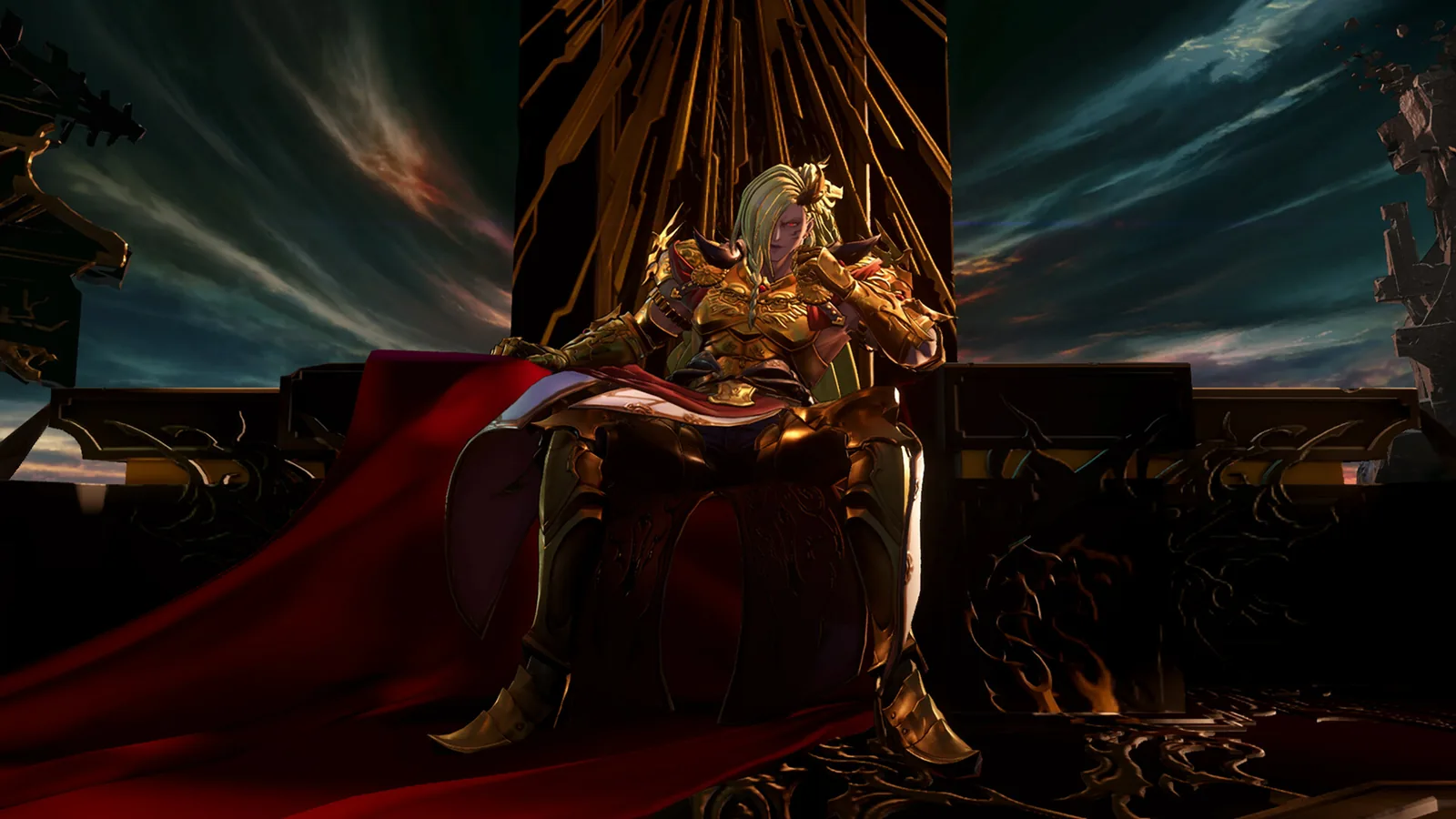 Official Endless Ragnarok gameplay image already stored locally for this guide.
The system map at a glance
| System | What it does | Important unlock or restriction | Best reason to use it |
|---|---|---|---|
| The Conflux | Solo cycles combining battles, puzzles, temporary traits/buffs, and upgrade rewards | Cycle 1 begins from a Chapter 6 Seedhollow side quest; later cycles follow Hard, Maniac, and Endless Ragnarok progress | Solo progression and materials |
| Fatebreaker | New skyfarer grade that gates major expansion systems | Reached through late-game progression | Opens the next build layer |
| Chaos quests | New high-end quest difficulty and story progression | Added as the new top quest tier, with Chaos+, Chaos++, and later challenges extending progression | Harder fights, new rewards, new sigils |
| Summons | Equip up to four summons with traits; use summon abilities in supported content | Fatebreaker plus the Summons tutorial; usable in Chaos-or-higher Fatebreaker quests and certain Conflux areas | Add attack or support options to combat |
| Primal Bursts | Powerful party payoff involving Proto Bahamut or Excavallion | Available in Chaos-or-higher Fatebreaker quests and the Conflux; triggered after the required full-burst conditions | Convert coordinated SBA play into another payoff |
| Master Traits | Character-specific post-level-100 customization across different styles | Character level 100 after reaching Fatebreaker; MSP raises Master Level | Specialize the character you actually play |
| Weapon Transcendence | Extends weapon upgrading beyond the previous fully upgraded state | Applies to fully upgraded weapons except bonus weapons | Push established weapons further |
| Backup Characters | Add a character delegated by another player to your party | Available as an expansion support feature | Cover a roster weakness or test another build |
This page is the map. The dedicated guides in this section go deeper into each mechanic without forcing you to read the same unlock explanation eight times.
Start with The Conflux earlier than you may expect
The Conflux is unusual because it is not simply an endgame activity. Cygames says its first cycle comes from a newly added Seedhollow side quest during Chapter 6, before departing for Dahli Island. Cycle 2 opens as you progress through Hard quests, Cycle 3 follows Maniac progression, and deeper cycles are tied to Endless Ragnarok's story.
The early cycles also have different reward purposes. Official unlock guidance describes Cycle 1 as a source of weapon-forging materials, Cycle 2 as a source of sigil-upgrade materials, and Cycle 3 as a place for weapon uncap/awakening materials and rare sigils. That makes the Conflux a bridge across progression, not a dungeon you should ignore until every other system is finished.
Inside the mode, temporary special traits and buffs change how a run develops. Use those effects to solve the run in front of you. A temporary Conflux bonus is not automatically evidence that your permanent build should imitate it. If a defensive effect turns repeated failures into a clear, the useful lesson may simply be that your normal setup needs more reliable uptime.
The dedicated Conflux guide is the next page if this is the system you are currently trying to unlock or farm.
Fatebreaker is the gate you should recognize
Ver. 2.0.2 added Fatebreaker as a new skyfarer grade. For systems planning, its importance is less about the label and more about what appears behind it.
Master Traits become available to level 100 characters after you reach Fatebreaker. Summons unlock after Fatebreaker and completion of the Summons tutorial. Cygames also restricts active Summon use to Fatebreaker quests at Chaos difficulty or higher and certain areas of the Conflux.
So if you are level 100 and wondering why Master Traits or Summons are not functioning as expected, do not immediately assume the save is bugged. Check your skyfarer-grade and tutorial progression first.
Chaos is more than a harder version of Proud
Cygames describes Chaos as the new highest quest tier introduced with Endless Ragnarok, with the Ragnalia among the threats tied to the new story. Ver. 2.0.2 also added new sigils obtainable from Chaos difficulty or higher and multiple side quests whose requirements advance through Chaos, Chaos+, and Chaos++.
The practical mistake is entering the tier as if the only question is whether your PWR number is high enough. Treat a first Chaos clear as an execution check. Can your controlled character survive the mechanics? Can your party maintain useful uptime? Are you losing to one phase repeatedly? Only after those answers are stable should you judge whether a more aggressive trait or sigil setup is actually an improvement.
Assist Mode also changed in Endless Ragnarok. The official systems page says Assist and Full Assist can now be used through the quests available before reaching the end of the Endless Ragnarok story, including Chaos content. That is useful for players prioritizing story access, although it does not remove the value of learning the systems if you intend to continue into harder post-story challenges.
Summons: four slots, but not four buttons to press blindly
Summons are a new source of character power and combat utility. Up to four summons can be equipped, and each summon has its own trait. The official systems description emphasizes two broad kinds of value: unique attack actions and powerful support abilities.
After unlocking the mechanic, build around purpose rather than rarity alone. An offensive summon can be valuable when it lines up with a real damage window. A support effect may be worth more when a difficult phase is ending otherwise successful attempts. The important restriction is that Summons are not universally available in every old quest: active use is for Fatebreaker quests at Chaos or higher and supported Conflux areas.
This also means a summon loadout should be tested in the content where you plan to use it. Training a normal rotation is still useful, but you cannot evaluate the full tactical layer by assuming the mechanic behaves like a permanent extra skill in every activity.
Primal Bursts reward party timing
Primal Bursts are connected to the party's Skybound Arts rather than functioning as another independent cooldown. Official information says they trigger after a full burst when the required conditions are met, calling on the power of Proto Bahamut or Excavallion.
That makes them especially relevant to coordinated multiplayer. If four players are close to an important boss window, preserving the SBA sequence for the full-party payoff may be stronger than spending each Art independently. In random matchmaking, however, do not turn the mechanic into a reason to waste obvious opportunities. A theoretical perfect Primal Burst that never happens is not better than a well-timed Chain Burst that secures the phase.
A dedicated Primal Burst page will cover the trigger and practical coordination separately so this hub can remain a navigation page rather than a giant mechanics dump.
Master Traits are where MSP becomes a build decision
Master Traits are one of the expansion's most important long-term systems. Once a character is level 100 and you have reached Fatebreaker, MSP can raise that character's Master Level. Higher Master Level allows more Master Traits to be equipped, and equipping enough traits from a particular Master Style activates passive style perks. Each character has three play-style directions, and some traits can substantially change how skills or core mechanics function.
Ver. 2.0.5 made this system materially easier to work with. The MSP storage cap increased from 999,999 to 9,999,999. Cygames also raised MSP rewards across selected Chaos++ quests and changed every Defy Infinity quest from 50,000 MSP to 250,000 MSP. At the same time, the update fixed a menu bug that could let players equip Master Traits beyond the intended limit.
For current builds, that means two things. First, an old MSP-farming recommendation from launch week may now be inefficient. Second, screenshots or videos showing an impossible number of equipped traits should not be copied as a legitimate build. Use the current equip limit and judge a style by repeatable performance.
A simple investment rule works well: raise Master Level first on the character you actively control, then on party members whose improvement solves a real problem. Spreading MSP across an entire roster before your core group is ready usually delays the benefit you can actually feel.
Weapon Transcendence extends gear you already built
Weapon transcendence is less flashy than Summons, but it matters because it extends the value of existing weapons. Ver. 2.0.2 states that all fully upgraded weapons except bonus weapons can be transcended.
Do not interpret that as a command to transcend every weapon immediately. Prioritize the weapon attached to a character you use in current progression. The system is strongest when it pushes a proven setup through a real breakpoint; it is weakest when materials disappear into characters you are not fielding.
The same update added a useful training improvement: Sir Barrold can display damage as a percentage of damage cap. When that readout reaches 100% or higher, Cygames explicitly recommends equipping more damage-cap-boosting effects to increase the ceiling. Use that tool before assuming another raw attack increase is the best upgrade.
Backup Characters are both support and a test drive
Backup Characters let you enlist a character delegated by another player. Cygames presents the system as a way to fill a missing role or try a different build.
That second use is easy to overlook. Before committing large amounts of MSP or weapon materials to a character you barely know, a suitable delegated character can give you a practical reference for how another setup feels in your party. It will not perfectly reproduce your own future build, but it can answer a more useful question: does this character or role actually solve the problem I have?
A sensible order for a returning player
You do not need a perfect universal route, because an old save near endgame and a new player in Chapter 6 start from different places. The useful sequence is based on gates:
- Unlock the Conflux when its Chapter 6 side quest appears. Keep advancing its cycles alongside the main difficulty ladder.
- Finish the late Relink progression needed for Chaos and Endless Ragnarok access. The official June unlock guidance points players through the Proto Bahamut endgame milestone, while Ver. 2.0.2 clarifies the new story's release-version requirements around The Tale of Bahamut's Rage and Conflux Cycle 3.
- Reach Fatebreaker. This is the key gate for level-100 Master Traits and the Summons system.
- Complete the Summons tutorial and test Summons in supported content. Do not assume they are usable everywhere.
- Develop one main through Master Traits and a proven weapon through transcendence. Use Sir Barrold's damage-cap display when tuning damage.
- Progress Chaos and the Endless Ragnarok story. Let harder content expose what your build actually lacks.
- Use Backup Characters and broader roster investment after your core progression is stable. Expand because you have a purpose, not because every new menu needs to be maxed immediately.
What changed by Ver. 2.0.5?
Most of the major systems themselves were introduced in Ver. 2.0.2, but the current environment is not identical to launch week. Ver. 2.0.5 fixed a Conflux treasure-bundle stock problem, corrected a Master Trait equip-limit bug, increased the MSP cap tenfold, and substantially increased MSP rewards in selected endgame quests. Those changes particularly affect progression guides written in July.
The systems hub therefore uses Ver. 2.0.5 as the current reference point, while individual system pages will retain historical 2.0.2 information where it explains how the mechanic originally unlocks. For a chronological list of fixes, use the Endless Ragnarok patch notes.
Which guide should you read next?
If you are blocked on solo progression, continue to the Conflux guide. If your issue is post-level-100 character growth, the upcoming Master Traits guide is the better destination. If you want to understand the new combat layer, use the Summons and Primal Burst guides once those pages are added. For the overall expansion route rather than one mechanic, return to the Endless Ragnarok start guide.
The main rule is simple: follow the gate that blocks your current goal. Endless Ragnarok becomes much easier to understand once Conflux, Fatebreaker, Chaos, Summons, Master Traits, and gear progression are treated as connected stages instead of simultaneous chores.