The Conflux is Endless Ragnarok's dedicated single-player progression mode, and the best way to use it is to enter with a specific material or progression goal rather than simply farming the deepest cycle you can reach. Cycle 1 begins from a new Seedhollow side quest during Chapter 6, Cycle 2 follows Hard-difficulty progression, Cycle 3 follows Maniac progression, and deeper cycles open as you advance through the Endless Ragnarok story. The mode mixes shuffled areas, battles, non-combat rooms, route choices, and temporary power-ups that last only for the current run.
That structure makes the Conflux different from ordinary quest farming. Your permanent build gets the run started, but your route and power-up choices determine how comfortably you reach the final encounter. The useful beginner rule is simple: solve the reason your run is failing before taking another conditional damage bonus.
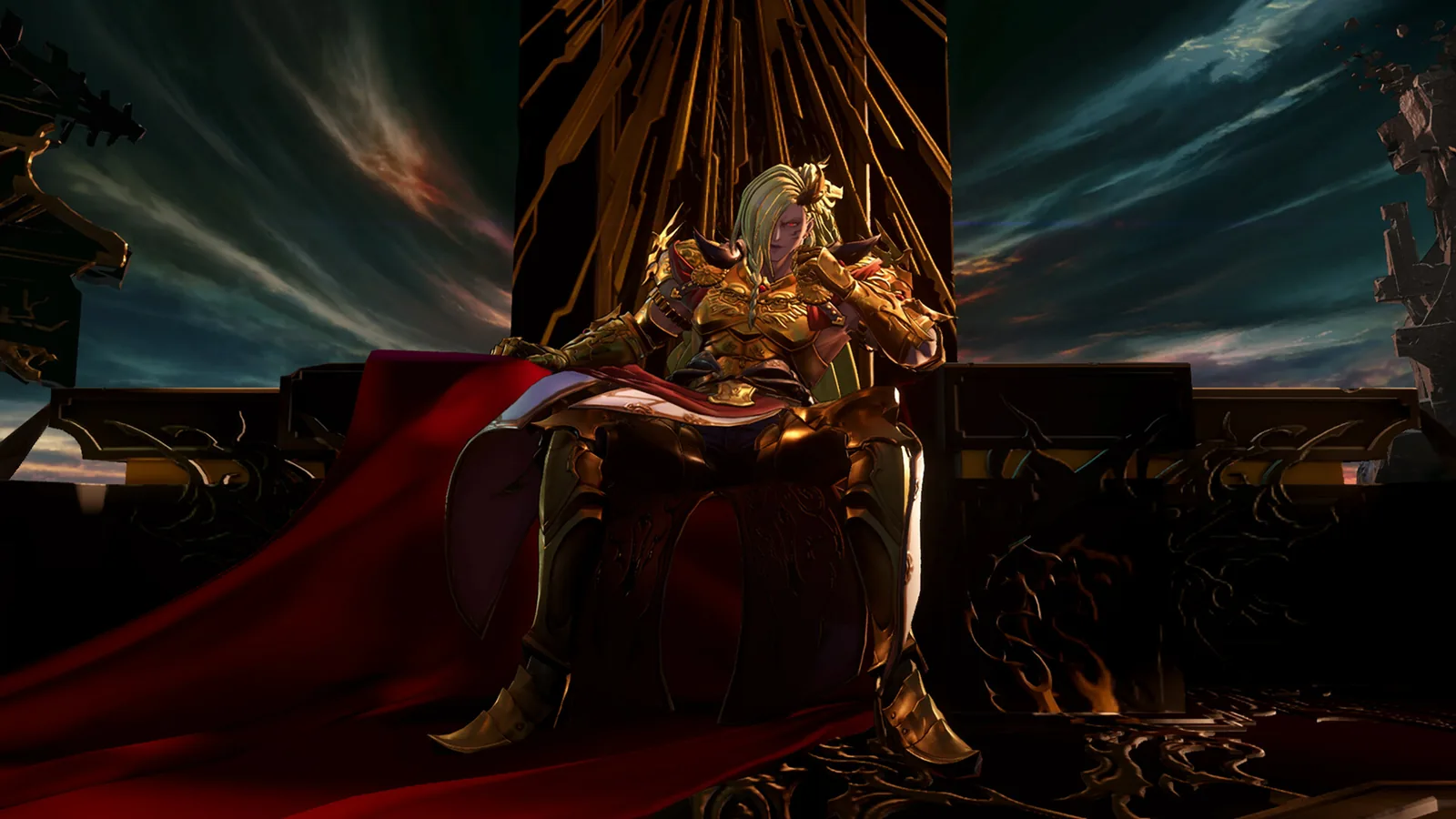 Official Endless Ragnarok gameplay image. The Conflux itself is a solo-only mode; this image is used as general expansion combat context.
Conflux unlock requirements at a glance
Cygames separates the first Conflux unlock from the gate into the Endless Ragnarok story. You do not need to finish the expansion story to start Cycle 1. The first gateway comes from a newly added side quest in Seedhollow during Chapter 6 of the original main story, before departing for Dahli Island.
| Conflux stage | Official unlock route | Main early reward focus |
|---|---|---|
| Cycle 1 | Undertake the new Chapter 6 Seedhollow side quest | Weapon-forging materials |
| Cycle 2 | Progress through Hard-difficulty quests | Sigil-upgrade materials |
| Cycle 3 | Progress through Maniac-difficulty quests | Weapon uncap/awakening materials and rare sigils |
| Deeper cycles | Progress through Endless Ragnarok's story | Higher-level progression and later Conflux rewards |
There is one especially important progression connection: the Ver. 2.0.2 notes state that starting the new Endless Ragnarok story requires clearing both The Tale of Bahamut's Rage (Proud) and Cycle 3 of the Conflux. That means Conflux is not just an optional side farm for a fresh or returning save. If you are trying to reach the expansion story and have already beaten Proto Bahamut but the new chapter still is not available, Cycle 3 is one of the first gates to check.
If Cycle 1 or a later cycle is missing
Do not farm the previous cycle blindly. First identify which progression track controls the missing unlock.
If Cycle 1 is absent, return to Seedhollow at the Chapter 6 point before the trip to Dahli Island and check the newly added side quest. If you are already far beyond Chapter 6, use the game's chapter progression tools rather than assuming Chaos quests unlock the gateway. Cycle 2 is tied to Hard progression; Cycle 3 is tied to Maniac progression. Deeper depths are tied to the Endless Ragnarok story.
This distinction matters because the expansion has several progression ladders running in parallel. Chaos, Fatebreaker, the new story, and the Conflux interact, but they are not interchangeable unlock conditions. The Endless Ragnarok systems guide is the better reference when you need the whole dependency map rather than only Conflux.
What actually happens during a Conflux run
Cygames describes the Conflux as a single-player gauntlet with changing areas. Promotional material and hands-on coverage add useful detail: area order can change between entries, some areas focus on combat, others may contain treasure or rare enemies, and clearing a zone lets you choose a special power-up that remains active until you leave the Conflux.
The run therefore has two builds at once. Your normal character, weapons, sigils, skills, and party preparation form the permanent base. The second build is temporary and develops from the choices you make inside the Conflux.
This is why copying a screenshot of somebody else's finished power-up stack is less useful than understanding why they selected each effect. You may not receive the same choices, and the next room may ask for a different strength.
Conflux Points and Resonance Points
Official promotional information also identifies Conflux Points and Resonance Points as resources earned through the mode. They can be spent on helpful power-ups that function inside the Conflux. Treat these as part of the mode's own progression layer rather than as a replacement for your ordinary Relink build.
For a new run, prioritize improvements that make your most common actions more reliable. A character that already clears safely can lean harder into damage. A character that repeatedly loses a run to the same dangerous phase benefits more from survivability, control, recovery, or a broadly active bonus than from a large effect with a trigger you rarely satisfy.
The distinction between permanent and Conflux-only strength is important for build testing. If a character suddenly feels extraordinary after stacking temporary effects, do not immediately rebuild every sigil outside the mode. Repeat a normal quest and verify which part of the improvement came from your permanent setup.
How to choose temporary power-ups
Use the next room and the previous failure as your decision inputs.
| What happened in the run | Better next choice | Why |
|---|---|---|
| You are taking too much unavoidable-looking damage | Durability, recovery, defensive uptime, or control | Staying alive lets you see more rooms and learn whether the damage was truly unavoidable. |
| You survive easily but rooms are slow | Broad attack, skill, cooldown, or damage effects that match your normal actions | Reliable damage is better than a bigger bonus attached to a condition you rarely trigger. |
| A particular mechanic repeatedly breaks your rhythm | A power-up that directly supports the answer you already use | It strengthens an existing solution instead of forcing a new rotation mid-run. |
| The run is stable and you are pushing a new depth | Stack an existing offensive strength while retaining one defensive answer | This raises the ceiling without turning a good run into an unnecessary gamble. |
A simple test helps: before selecting a power-up, explain in one sentence how it will activate in the next few rooms. If you cannot, the effect is probably too conditional for your current run.
Pick cycles by reward, not only by depth
Cycle 1 is useful when weapon forging is the bottleneck. Cycle 2 becomes the more logical destination when sigil upgrades are holding you back. Cycle 3 matters when weapon uncaps, awakening materials, and rare sigils are the target. Later cycles make sense when the expansion story and your permanent progression have moved beyond those early needs.
Ver. 2.0.2 also ties specific weapon materials to Conflux cycles. For example, the update notes identify Chaos Refinium as obtainable from Conflux Cycle 2 and Mythic Artifact as obtainable from Cycle 4 for certain newly forgeable weapons. That is another reason to read the blacksmith requirement first and then choose the cycle, rather than assuming the highest available depth is automatically the best farm.
Write down the exact item you need before entering. It sounds trivial, but it prevents a common endgame mistake: repeatedly clearing comfortable content that cannot provide the material blocking the upgrade you actually want.
Ver. 2.0.5: the Conflux shop fix you should know about
The Conflux also received a relevant system fix after launch. In Ver. 2.0.5, Cygames fixed an issue where certain limited-supply treasure bundles could incorrectly show zero stock. The corrected stock behavior is tied to whether you possess Chaos Refinium or Mythic Artifact and whether there are applicable weapons available to forge.
For a returning player, the practical advice is to update the game before diagnosing a zero-stock bundle as a permanent progression lock. If an older guide or video shows shop behavior that does not match your current game, use the current inventory and Ver. 2.0.5 rules rather than trying to reproduce launch-week behavior.
This patch did not redesign the Conflux loop. The important fundamentals remain the same: unlock the correct cycle, enter solo, make route and temporary-power choices, defeat the final challenge, and use the resulting materials to advance permanent character or weapon progression.
A reliable first-run plan
Start with the character whose dodge, guard, skill timing, and damage windows you already understand. The Conflux is a bad place to combine three experiments at once: a new character, an unfamiliar permanent build, and randomized temporary effects.
For the first few runs, use a narrow objective. Run one can simply reach the next unfamiliar room. Run two can test whether a defensive power-up changes the phase that ended run one. Run three can replace that safety choice with damage only if the previous run was already stable.
When you lose, classify the failure before changing equipment. Was the permanent build too weak? Did you choose a temporary effect that rarely activated? Did you take an unfamiliar route without enough safety? Or did you simply miss a dodge you normally make? Those failures have different solutions.
This method is slower than copying a supposed "best Conflux build" for one run, but it is much faster at producing repeatable clears across randomized routes.
Summons inside the Conflux
Summons and the Conflux were introduced together in Cygames' official promotional video, but do not assume every room behaves like a Chaos quest. The Ver. 2.0.2 notes specify that Summons can be used in Chaos-or-higher Fatebreaker quests and in certain areas of the Conflux. Primal Bursts likewise operate in the Conflux where their conditions are available.
That makes Summons another tactical layer rather than the foundation of every room. Build a Conflux plan that functions without assuming a summon will solve each encounter, then use the system where it is available to create damage, support, control, or safer transitions.
The official Summons and the Conflux video embedded on this page is worth watching because it shows the intended shape of both systems rather than presenting Conflux as ordinary multiplayer endgame content.
Common Conflux mistakes
Waiting for multiplayer. Conflux is deliberately single-player. Build a dependable offline party and treat your controlled character's execution as the center of the run.
Confusing Cycle 3 with the end of Conflux progression. Cycle 3 is an important gate, including for the expansion story, but deeper cycles continue to open through Endless Ragnarok progression.
Treating temporary effects as permanent build advice. A powerful run can reveal useful synergies, but reproduce the idea outside Conflux before spending rare permanent resources around it.
Ignoring the reward table. If you need sigil materials, weapon forging resources, or a later special material, target the cycle connected to that need.
Using launch-version shop advice in Ver. 2.0.5. The limited-supply bundle issue was fixed. Update first, then troubleshoot current stock conditions.
Where to go after Conflux
If your immediate goal is to start Endless Ragnarok's story, make sure you have both Cycle 3 and The Tale of Bahamut's Rage cleared. If you are already inside the expansion and want to decide whether your next hour belongs in Conflux, Chaos, Master Traits, or another progression system, return to the systems hub. For patch-specific changes that may affect farming or progression, use the latest patch notes.